The Ultimate Small Business Website Checklist for 2026
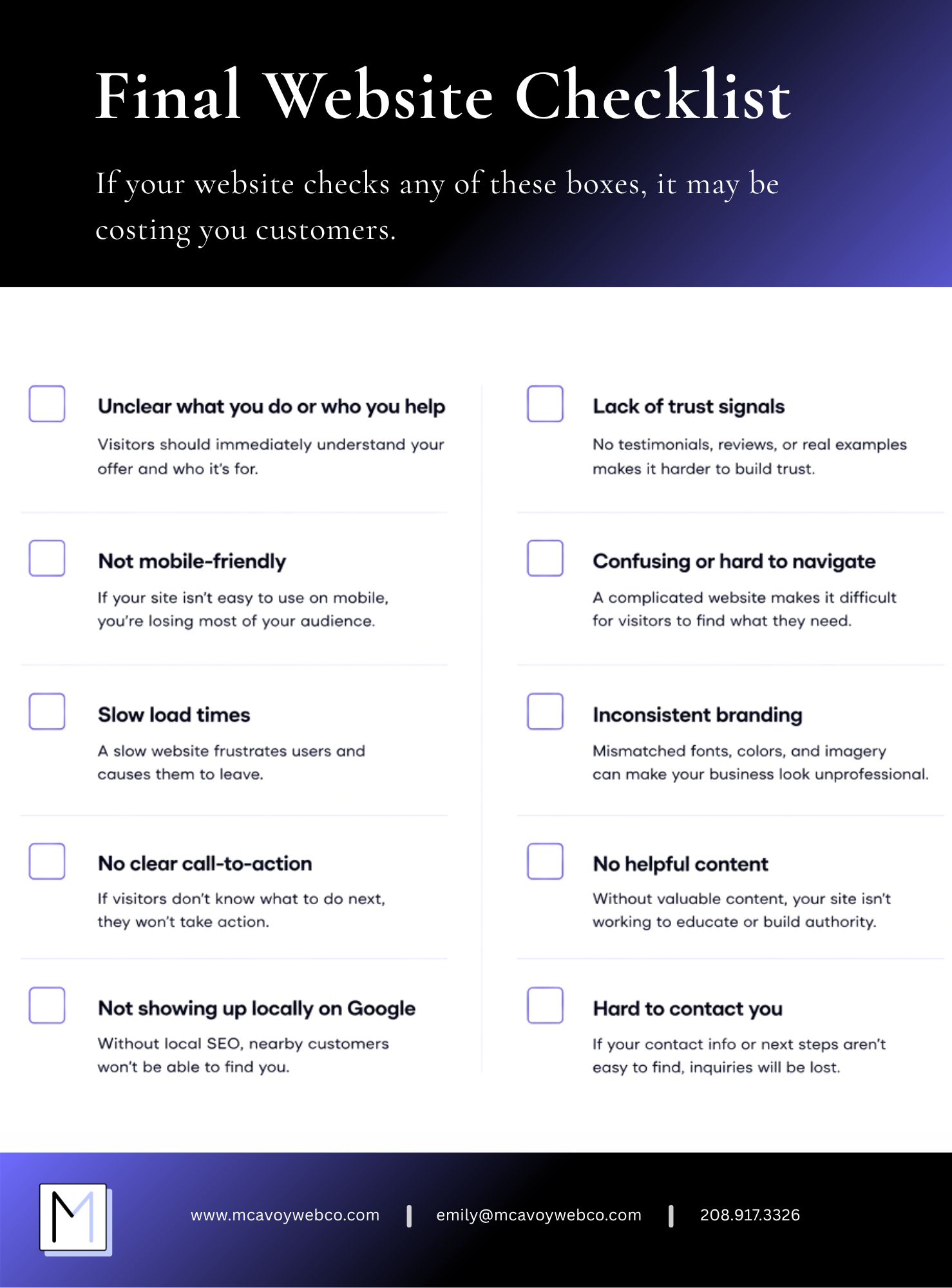
Most small business websites fail because they are missing foundational elements that build trust, improve SEO, and guide users toward taking action. In web design, the CTA (call-to-action) is ultimately what the entire site should support. Most businesses fall into one primary CTA category: inquiry, booking, requesting a quote, purchasing a product, or subscribing. A website should be strategically designed to support that CTA from the beginning to the end of the visitor journey.
Clear Hero Section
Your hero section should be one of the strongest and most intentional parts of your website. Typically, this includes a strong image, a headline clearly outlining your services or offerings, information about who you help, and a call-to-action button guiding visitors toward the next step.
If a visitor immediately feels uncertain about whether your business offers what they are looking for or whether your services are meant for them, they will likely leave your website. Especially for service-based businesses, clearly identifying your audience is important because it helps qualify leads before they ever contact you. If your messaging is too vague, you may attract inquiries from people outside of your ideal customer base.
Your hero section is often the very first opportunity to build clarity, trust, and direction for potential customers.

Mobile Friendly Design
Mobile devices now account for roughly 60–64% of global web traffic, meaning most people will experience your website on a phone before they ever see it on a desktop computer. Because of this, mobile-friendly design is no longer optional.
A mobile-friendly website should feel clean, responsive, and easy to navigate on smaller screens. Text should be readable, buttons should be easy to tap, and layouts should adjust smoothly across devices. Poor mobile experiences often lead to visitors leaving your website quickly, which can negatively impact both conversions and SEO performance.
Simply put, if your website does not function well on mobile, it will likely cost your business opportunities and customers.

Fast Load Times
People today have endless access to information and increasingly shorter attention spans, making website speed more important than ever. Visitors expect websites to load quickly, and even a few extra seconds can impact whether someone stays on your site or leaves.
Many different elements can affect load times, including:
Large image files
Video formatting
Excessive animations
Poor coding structure
Server performance
Third-party plugins or scripts
The average page load time is approximately 2.5 seconds on desktop and 8.6 seconds on mobile. If your website exceeds these benchmarks, it may be time to optimize your site performance.
Fast-loading websites not only improve user experience but can also positively impact SEO rankings and conversion rates.

Strong Call to Action
A strong call-to-action has two important layers: wording and repetition.
First, the wording should clearly guide the customer toward the next step required to do business with you. Depending on your business, this may involve:
Booking a consultation
Requesting a quote
Contacting your team
Shopping products
Starting a free trial
Scheduling a service
Identifying your primary CTA early is essential because your website should consistently support that goal.
The second layer is repetition. Every page on your website should reinforce your main CTA in a natural and strategic way. While CTAs may vary slightly depending on the page or service, most businesses have one primary action they ultimately want visitors to take.
This is why many websites place their CTA within the global header, while also incorporating it throughout page content and within the footer. Effective website design balances repetition without creating visual clutter, ensuring visitors always know what step to take next.
Local SEO
SEO stands for “Search Engine Optimization,” which is the process of improving your website’s visibility on search engines like Google. SEO is essential because most customers begin their search for products or services online using keywords and search phrases.
One of the biggest advantages of SEO is that organic traffic is free, but it does require consistency, quality content, and strategic optimization.
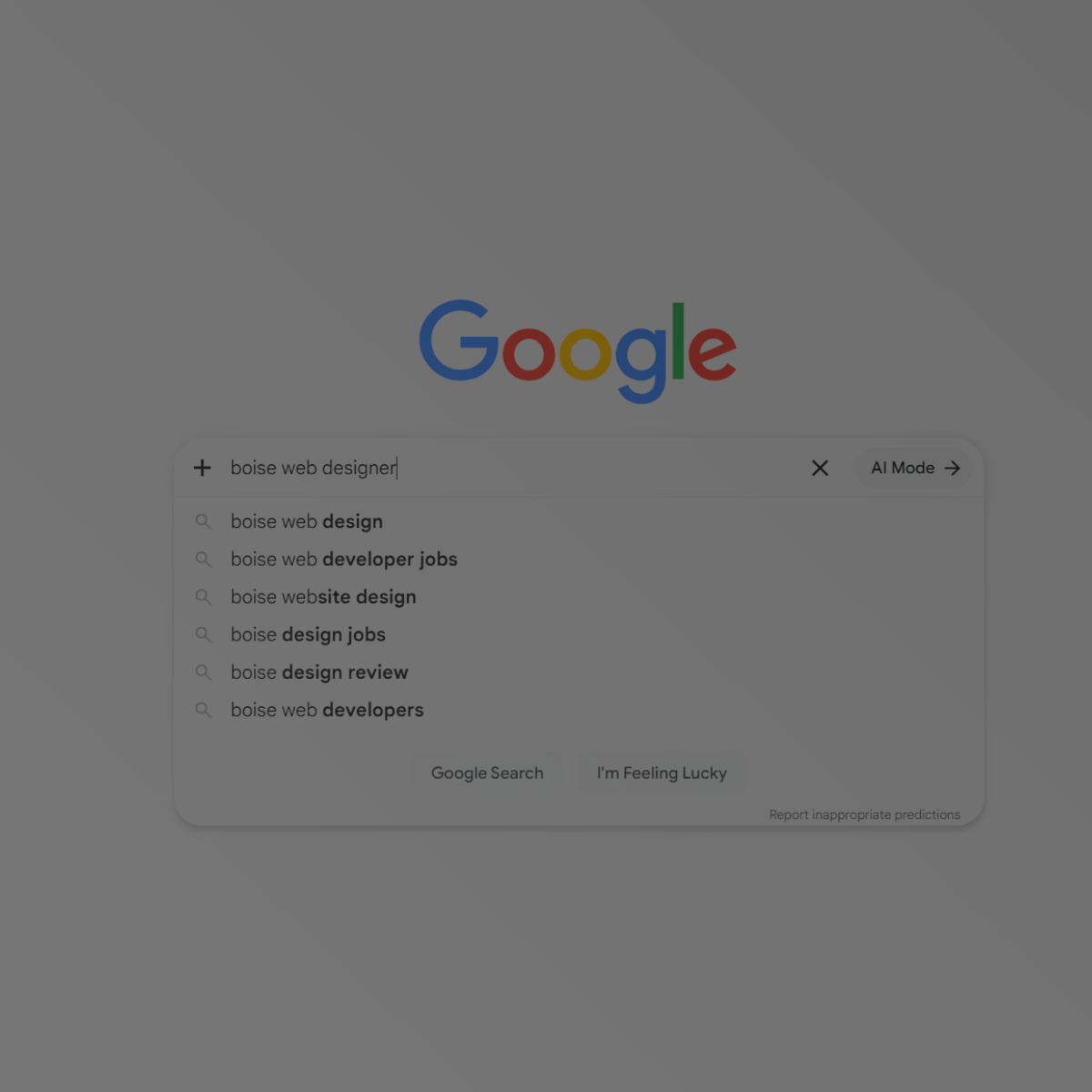
Local SEO is especially important for smaller businesses because it helps improve visibility within your specific geographic area. For example, a business in Boise wants to appear when local customers search for related services nearby.
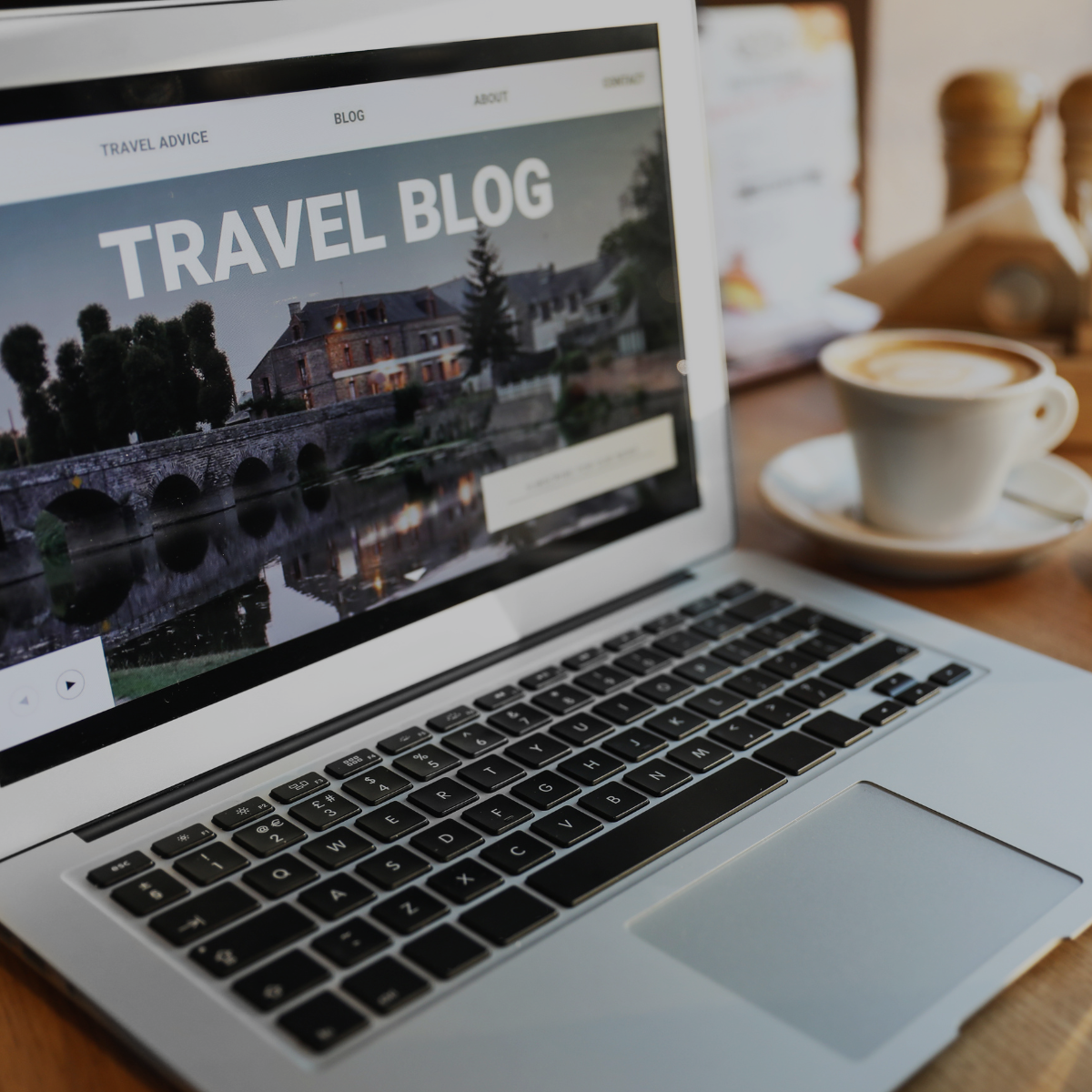
Google values educational, relevant, and organic content, which is why many businesses create blog content to improve SEO performance. For example, a local gardening company may write a blog about the best flowers to plant in Boise during summer. Google can then crawl and index that content for related searches.
The key is creating content that is both relevant to your business and naturally tied to your local area. Overusing keywords or forcing local phrases into content can actually hurt readability and credibility. Google has become increasingly effective at recognizing authentic, valuable content versus content written only for rankings.
Metadata also plays an important role in local SEO. This includes:
Page titles
Meta descriptions
Image file names
Alt text
Heading structure
Internal linking
Together, these elements help search engines better understand your website and improve your visibility in search results.

Consumers are constantly exposed to advertisements, offers, and competing businesses online. Because of this, people are often subconsciously deciding whether or not they trust a business within seconds of landing on a website.
The faster your website establishes trust, the better.
Trust signals can include:
Customer reviews
Testimonials
Portfolio examples
FAQs
Real photography
Case studies
Professional branding
Clear contact information
Authenticity matters. Real photos of your business, team, products, or completed work often build more credibility than generic stock imagery. Design quality also plays a significant role in trust. Clean layouts, organized content, and cohesive branding naturally make businesses appear more professional and established.
A website should not only look visually appealing, but also reassure visitors that your business is legitimate, experienced, and trustworthy.

Simple Navigation
Simple Navigation
Your website navigation should feel intuitive and effortless for visitors. If someone has to “hunt” for information, chances are they are going to leave your site before taking action. Good navigation helps users quickly understand where to go, what your business offers, and how to take the next step.
Most small business websites only need a few core navigation links:
Home
About
Services
Portfolio or Gallery
Blog
Contact
Trying to cram too many pages, dropdowns, or menu options into your navigation can actually overwhelm visitors and make your website feel cluttered. Simplicity almost always performs better.
It is also important to structure your pages strategically. Visitors should be able to get to important information within just a few clicks. This improves user experience, keeps people on your site longer, and can even help your SEO performance because search engines are able to better crawl and understand your website structure.
Mobile navigation is equally important. Since most users are now browsing on phones, your mobile menu should be clean, easy to tap, and not overcrowded with unnecessary links or buttons.
A well-organized website creates confidence. When a site feels easy to navigate, people naturally view the business itself as more professional and trustworthy.

Consistent Branding
Strong branding creates familiarity and trust. When every part of your website feels visually and verbally connected, visitors are more likely to remember your business and feel confident working with you. Inconsistent branding can make even a legitimate business feel unprofessional or unfinished.
Your branding goes beyond just having a logo. It includes:
Typography choices
Brand colors
Photography style
Graphic elements
Tone of voice
Messaging consistency
For example, if your business has a clean and modern visual identity, but your website uses outdated fonts, low-quality images, or inconsistent messaging, it creates disconnect for the customer. The goal is for every page of your website to feel cohesive and intentional.
Photography style is especially important. Real photos of your work, team, products, or business instantly build more trust than random stock imagery. Customers want to feel like there are real people behind the business.
Tone of voice matters too. Your website copy should sound aligned with your audience and industry. A luxury brand, local coffee shop, law office, and creative agency should all communicate differently. The way your business “sounds” online becomes part of your branding.
Consistent branding helps businesses appear more established, memorable, and trustworthy, all of which can directly impact conversion rates.
SEO-Friendly Content
SEO-friendly content helps search engines better understand your business and improves your chances of appearing in search results when potential customers are looking for your services.
One of the best ways to improve SEO over time is through consistent educational content. This is why many businesses create blogs answering common customer questions, sharing expertise, or discussing local topics related to their industry.
For example:
A landscaping company may write about the best plants for Idaho summers
A bakery may share custom cake trends for weddings
A photographer may create a guide on choosing photo locations in Boise
This type of content helps build authority while naturally targeting keywords people are already searching for online.
Service pages are equally important. Each core service should ideally have its own dedicated page with clear explanations, keywords, and calls-to-action. This gives Google more context about what your business offers and creates more opportunities to rank in search results.
Internal linking also plays a major role in SEO. Linking related pages and blogs together helps users navigate your site while helping search engines better understand your website structure. For example, a blog about website costs could naturally link to your web design services page or portfolio.
The key with SEO content is consistency. SEO is not usually an overnight strategy, but businesses that consistently publish quality content often build stronger long-term visibility over time.

Contact Info That’s Easy to Find
Contact Information That’s Easy to Find
One of the simplest but most overlooked parts of a business website is making contact information easy to access. If visitors are ready to reach out, book, or ask questions, they should never have to search for how to contact you.
Your contact information should be clearly visible throughout your website, especially in:
The navigation/header
Contact page
Footer
Call-to-action sections
Depending on your business, this may include:
Phone number
Email address
Contact form
Physical address
Booking links
Social media links
For local businesses, having accurate and consistent contact information is also important for local SEO. Google uses this information to verify and connect your business across search results and business listings.
The easier you make it for customers to contact you, the more likely they are to take action.
Final Thoughts
A successful small business website is not just about looking good. It should strategically guide visitors, build trust, improve visibility, and support your overall business goals.
From strong calls-to-action and mobile-friendly design to SEO content and branding consistency, every part of your website should work together to create a better experience for your audience.
If your current website feels outdated, confusing, slow, or ineffective, small strategic improvements can make a significant difference over time.
Whether you need a complete redesign, an SEO-focused refresh, or guidance on improving your current website, investing in a strong online presence is one of the most valuable things you can do for long-term business growth.